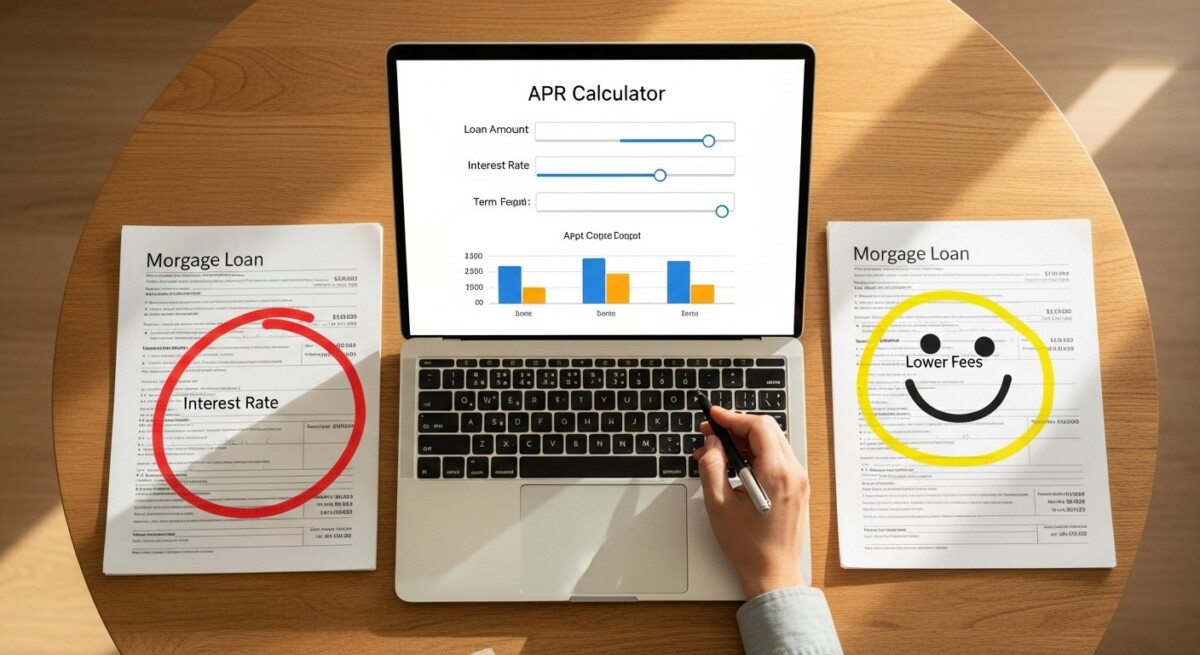
You are sitting at your kitchen table, staring at loan offers from two different lenders. One has a lower interest rate, but the other has lower fees. Which one actually saves you more money over time? This is the exact moment when thousands of home buyers and homeowners begin searching for an APR calculator. An APR calculator cuts through the confusion by showing you the true cost of a loan,not just the interest rate, but all the fees and charges bundled together. Whether you are buying your first home, refinancing an existing mortgage, or exploring a home equity loan, understanding APR helps you compare offers honestly and confidently.
Understanding APR calculator
An APR calculator is a simple online tool that estimates the annual percentage rate (APR) of a loan. Unlike the interest rate, which only tells you the cost of borrowing the principal, APR includes the interest rate plus lender fees, discount points, mortgage insurance, and certain closing costs. Think of APR as the “all-in” price tag for your loan.
When you enter your loan amount, interest rate, fees, and loan term into an APR calculator, it quickly computes the true yearly cost. This number is almost always higher than the advertised interest rate because it accounts for upfront expenses. Lenders are required by law to disclose the APR, but using a calculator yourself lets you double-check and compare offers side by side.
People search for an APR calculator because they want to compare mortgage offers fairly. One lender might advertise a low rate but charge high origination fees. Another might have a slightly higher rate but very low fees. The APR reveals which loan is actually cheaper over the life of the loan. It is one of the most practical tools for making an apples-to-apples comparison between different loan options.
Why Mortgage Rates and Loan Terms Matter
The interest rate on your mortgage directly affects your monthly payment. A difference of even half a percentage point can mean hundreds of dollars more each month,and tens of thousands over a 30-year loan. But the rate alone does not tell the full story. The loan term, or how long you have to repay the loan, also plays a huge role in your financial picture.
Shorter loan terms, like 15 years, usually have lower interest rates but higher monthly payments. Longer terms, like 30 years, have lower monthly payments but you pay more interest over time. An APR calculator helps you see how the combination of rate, term, and fees affects your total cost. This clarity allows you to choose a loan that fits your monthly budget and long-term goals.
When you understand how rates and terms work together, you stop focusing only on the lowest monthly payment. Instead, you look at the total cost of the loan. This shift in perspective can save you thousands of dollars and help you build equity faster. It also empowers you to ask lenders better questions and negotiate more effectively.
If you are exploring home financing options, comparing lenders can help you find better rates. Request mortgage quotes or call to review available options.
Common Mortgage Options
Choosing the right mortgage starts with understanding the most common loan types. Each option has different features, benefits, and ideal use cases. Here is a quick breakdown of the most popular mortgage options available today:
- Fixed-rate mortgages , The interest rate stays the same for the entire loan term. Monthly payments remain predictable, making this a great choice for buyers who plan to stay in their home for many years.
- Adjustable-rate mortgages (ARMs) , The interest rate is fixed for an initial period (often 5, 7, or 10 years) and then adjusts periodically based on market rates. ARMs usually start with a lower rate, which can be helpful if you plan to sell or refinance before the adjustment period ends.
- FHA loans , Insured by the Federal Housing Administration, these loans allow lower down payments (as low as 3.5%) and are easier to qualify for with a lower credit score. They are popular among first-time home buyers.
- VA loans , Available to veterans, active-duty service members, and eligible spouses. VA loans offer competitive rates, no down payment, and no private mortgage insurance requirement.
- Refinancing loans , These replace your existing mortgage with a new one, often to get a lower rate, change the loan term, or switch from an ARM to a fixed rate. Cash-out refinancing lets you tap into your home equity for extra cash.
Each mortgage type comes with its own set of fees and rate structures. Using an APR calculator lets you compare these options on equal footing so you can see which one truly costs less over time.
How the Mortgage Approval Process Works
The mortgage approval process can feel overwhelming, but breaking it down into steps makes it manageable. Most lenders follow a similar path from application to closing. Understanding these steps helps you prepare and avoid surprises.
- Credit review , The lender checks your credit score and credit report to assess your borrowing history and risk level. A higher score generally qualifies you for better rates.
- Income verification , You provide pay stubs, tax returns, bank statements, and other documents to prove you can afford the loan. Lenders want to see stable, reliable income.
- Loan pre-approval , Based on your credit and income, the lender gives you a pre-approval letter stating how much you can borrow. This shows sellers you are a serious buyer.
- Property evaluation , An appraiser inspects the home to confirm its value matches the purchase price. The lender uses this to ensure the loan amount is appropriate.
- Final loan approval , Once all conditions are met, the lender issues final approval. You sign the closing documents, pay any remaining closing costs, and the loan funds.
Each step involves paperwork and communication with your lender. Staying organized and responsive speeds up the process. Tools like an APR calculator can also help you prepare by showing you how different loan offers affect your monthly budget before you even apply.
Speaking with lenders can help you understand your eligibility and available loan options. Compare mortgage quotes here or call to learn more.
Factors That Affect Mortgage Approval
Lenders evaluate several key factors when deciding whether to approve your mortgage application. Knowing what they look for can help you improve your chances and negotiate better terms.
- Credit score , This is one of the most important factors. A higher score signals that you are a reliable borrower. Most conventional loans require a minimum score of 620, while FHA loans may accept scores as low as 580.
- Income stability , Lenders prefer borrowers with a steady employment history. Two or more years of consistent income from the same employer or industry strengthens your application.
- Debt-to-income ratio (DTI) , This compares your monthly debt payments to your gross monthly income. Most lenders want a DTI below 43%, though lower ratios are better.
- Down payment amount , A larger down payment reduces the lender’s risk and can help you avoid private mortgage insurance (PMI). It also shows you have financial discipline.
- Property value , The home must appraise for at least the purchase price. If the appraisal comes in low, you may need to negotiate a lower price or bring more cash to closing.
Improving any of these factors before you apply can lead to better loan offers. Even small changes, like paying down credit card debt or saving for a larger down payment, can make a meaningful difference in the rates and terms you receive.
What Affects Mortgage Rates
Mortgage rates change constantly, and several factors influence the rate you are offered. Some are within your control, while others depend on the broader economy.
Market conditions play a major role. When the economy is strong and inflation is high, rates tend to rise. When the economy slows, rates often fall. The Federal Reserve’s policies also influence short-term rates, which can ripple into mortgage rates. You cannot control the market, but you can time your application when rates are favorable.
Your credit profile is one of the biggest factors you can control. Borrowers with excellent credit scores and low DTI ratios qualify for the lowest rates. Your loan term also matters,15-year loans typically have lower rates than 30-year loans. Additionally, the type of property you are buying affects rates. Investment properties and condos often carry higher rates than single-family owner-occupied homes.
Because rates vary by lender and borrower profile, shopping around is essential. Even a small difference in rate can save you thousands over the life of your loan. Using an APR calculator helps you see the real impact of rate differences combined with fees.
Mortgage rates can vary between lenders. Check current loan quotes or call to explore available rates.
Tips for Choosing the Right Lender
Choosing a lender is just as important as choosing the right loan type. The right lender will offer competitive rates, clear communication, and a smooth process. Here are practical tips to help you find a lender you can trust.
- Compare multiple lenders , Get quotes from at least three to five lenders. Include banks, credit unions, and online lenders. Each may offer different rates and fees.
- Review loan terms carefully , Look beyond the interest rate. Check the APR, loan term, prepayment penalties, and any balloon payments. Make sure you understand every line item.
- Ask about hidden fees , Some lenders charge application fees, processing fees, or underwriting fees that are not included in the APR. Ask for a full fee schedule upfront.
- Check customer reviews , Look for reviews on sites like the Better Business Bureau, Google, or Zillow. Pay attention to comments about communication, timeliness, and problem resolution.
Taking the time to compare lenders can save you thousands of dollars. An APR calculator is an excellent tool for comparing offers side by side. When you find a lender that offers a fair APR and good service, you can move forward with confidence.
Long-Term Benefits of Choosing the Right Mortgage
Selecting the right mortgage is not just about getting into a home,it is about building long-term financial security. When you choose a loan with a favorable APR and terms that fit your budget, you set yourself up for years of stable payments and growing equity.
Lower monthly payments free up cash for other goals, such as saving for retirement, investing, or home improvements. Long-term savings from a lower APR can amount to tens of thousands of dollars over the life of the loan. That is money you can use to build wealth rather than pay interest. Financial stability comes from knowing your housing costs are predictable and manageable, even during economic ups and downs.
Finally, choosing the right mortgage improves your home ownership planning. Whether you plan to stay in your home for five years or thirty, the right loan helps you reach your goals faster. An APR calculator is one of the simplest tools to help you see the big picture and make a decision you can feel good about for years to come.
What is the difference between APR and interest rate?
The interest rate is the cost of borrowing the principal amount, shown as a percentage. APR includes the interest rate plus lender fees, points, and certain closing costs. APR gives you a more complete picture of the total loan cost.
How do I use an APR calculator for mortgage comparison?
Enter the loan amount, interest rate, fees, and loan term into the calculator. It will show you the APR for each loan option. Compare the APRs,the lower APR usually means a cheaper loan overall, assuming similar terms.
Does APR include mortgage insurance?
Yes, APR typically includes mortgage insurance premiums, such as PMI for conventional loans or MIP for FHA loans, if they are required. This makes the APR a more accurate reflection of your total annual cost.
Can APR change after I lock my rate?
APR is based on the interest rate and fees you agree to at closing. If you lock your rate and the fees stay the same, the APR will not change. However, if you change loan programs or add fees, the APR may shift.
Why do two lenders offer different APRs for the same rate?
Each lender has its own fee structure. One may charge higher origination fees or closing costs, which increases the APR. Comparing APRs helps you see which lender offers the better overall deal.
Is APR the only number I should consider?
APR is a great starting point, but you should also consider the loan term, monthly payment, and any prepayment penalties. A loan with a slightly higher APR but lower monthly payments might work better for your cash flow.
What is a good APR for a mortgage right now?
Mortgage rates change frequently based on market conditions. A “good” APR depends on your credit score, loan type, and current economic factors. Checking rates on a platform like RateChecker can help you see current averages and compare offers.
Should I use an APR calculator for refinancing?
Absolutely. Refinancing involves closing costs and fees, just like a purchase loan. An APR calculator helps you compare your current loan with refinancing offers to see which option saves you more money over time.
Exploring your mortgage options does not have to be stressful. With the right tools and a clear understanding of APR, you can compare loan offers with confidence. Start by using an APR calculator to see the true cost of each loan, then request mortgage quotes from multiple lenders. The time you invest in comparison shopping today can save you thousands of dollars and give you greater peace of mind in your home.