
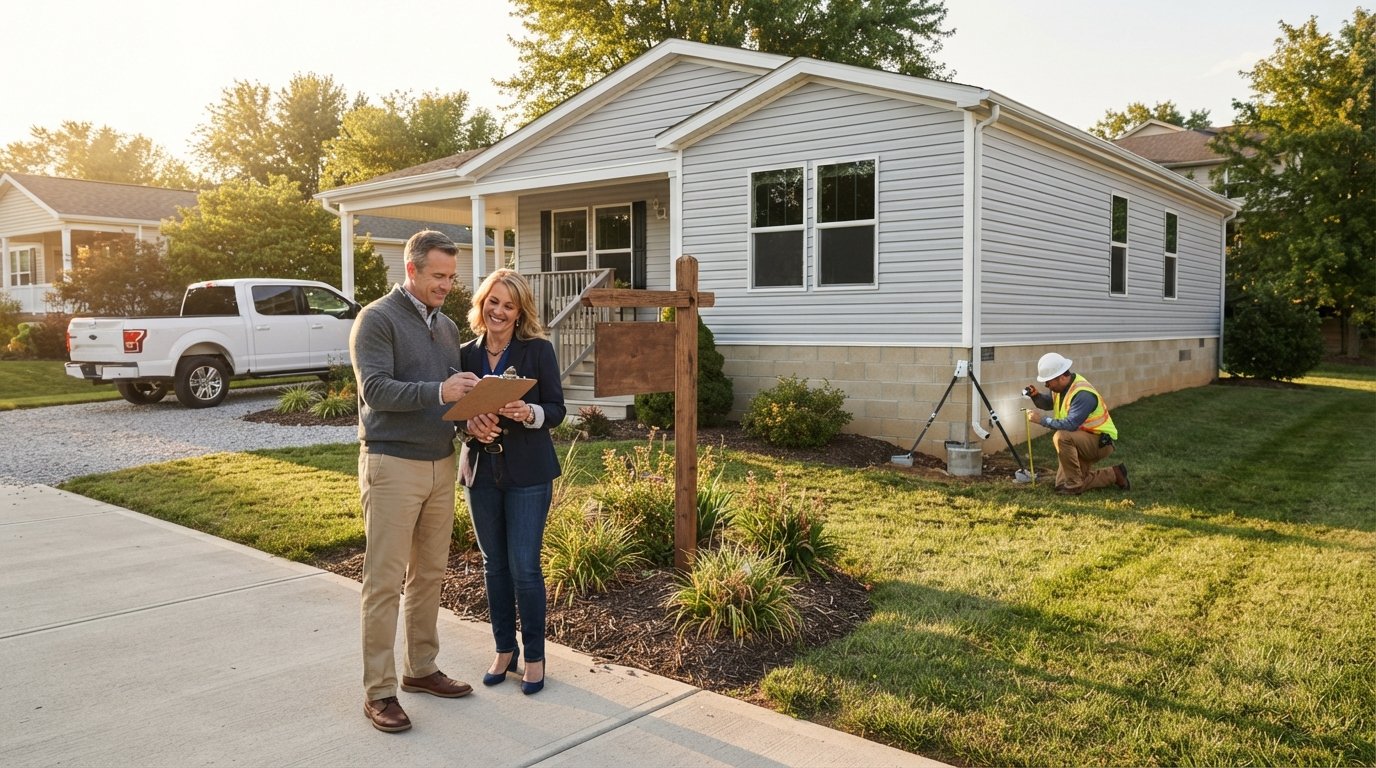
Reverse Mortgage on Manufactured Home Requirements in 2026
Reverse mortgage on manufactured home requirements include HUD code compliance, a permanent foundation, and real property status. Learn how to qualify and compare offers.

By Daniel Reed
If you are 62 or older and own a manufactured home, you may be wondering whether you can convert your home equity into retirement income through a reverse mortgage. The answer depends on a specific set of federal guidelines that separate eligible manufactured homes from those that do not qualify. Understanding these rules before you apply can save you time, money, and frustration. This guide breaks down the reverse mortgage on manufactured home requirements, explains how foundation and permanent affixture rules work, and shows you how to check whether your home meets the criteria. You will also learn how to use RateChecker's reverse mortgage tools to compare offers and understand the terms available to you.
What Makes a Manufactured Home Eligible for a Reverse Mortgage
The Home Equity Conversion Mortgage (HECM) is the most common reverse mortgage product in the United States, and it is insured by the Federal Housing Administration (FHA). Because of that federal backing, the property must meet FHA and Department of Housing and Urban Development (HUD) standards. Not every manufactured home qualifies. The rules focus on the home's foundation, how it is attached to the land, its age, and its compliance with building codes.
A manufactured home is defined as a structure built after June 15, 1976, in a factory and constructed to the HUD Manufactured Home Construction and Safety Standards. Homes built before that date are generally not eligible for a HECM. The home must also be classified as real property, not personal property. That distinction matters because a reverse mortgage is a lien against real estate, not against a vehicle or a movable structure.
To qualify, the manufactured home must meet the following core requirements:
- Built on or after June 15, 1976, and constructed to HUD code.
- Classified and taxed as real property in the county where it sits.
- Permanently affixed to a foundation that meets FHA guidelines.
- Owned by the borrower, including the land beneath the home.
- Used as the borrower's principal residence.
Each of these requirements carries its own set of documentation and inspection steps. For example, the home must have a permanent foundation that is engineered and certified. The borrower must own the land or have a long-term lease that meets FHA rules. The home must also be in good condition and meet minimum property standards. If any of these elements are missing, the loan will not close until the issues are resolved.
HUD and FHA Foundation and Permanent Affixture Requirements
The foundation is the single most important physical feature that determines whether a manufactured home can secure a reverse mortgage. HUD requires the home to be permanently affixed to a foundation that is designed for the site and the home's specific characteristics. That means the foundation must be engineered, not just a set of piers or blocks. The foundation must also be certified by a licensed engineer or registered architect who confirms it meets FHA standards.
In addition to the foundation itself, the home must be permanently affixed to the land. This is often called the permanent affixture requirement. It means the home cannot be easily moved. The wheels, axles, and towing hitch must be removed. The home must be connected to utilities and have a permanent perimeter enclosure. The title must also be surrendered, and the home must be recorded as real property with the local government. These steps transform the home from personal property into real estate.
FHA guidelines also specify that the foundation must be a permanent foundation system that transfers loads to the ground. It must be designed to resist frost heave, seismic activity, and wind uplift, depending on the region. The foundation must be inspected and approved before the reverse mortgage can be insured. If the foundation does not meet these standards, the homeowner may need to have it upgraded or replaced, which can be a significant expense.
Another key requirement is that the manufactured home must be attached to the land before the reverse mortgage is closed. You cannot use a reverse mortgage to purchase a manufactured home and then affix it later. The home must already be on a permanent foundation and classified as real property at the time of application. This is a common point of confusion for homeowners who plan to move their home or place it on a new lot.
How to Determine If Your Manufactured Home Meets Eligibility Rules
Before you apply for a reverse mortgage, you should assess whether your manufactured home meets the reverse mortgage on manufactured home requirements. Start by gathering key documents: the title or deed, the property tax records, the foundation certification, and the home's data plate or HUD certification label. The data plate is usually found inside the home, often near the electrical panel or in a closet. It confirms the home was built to HUD code after June 15, 1976.
Next, check with your county assessor or tax office to confirm how the home is classified. If it is listed as personal property, you will need to complete the steps to convert it to real property. That typically involves surrendering the title, recording a affidavit of affixture, and having the foundation inspected and certified. Your local building department can guide you through the process, but it is often wise to consult a real estate attorney or a title company.
You can also use a simple checklist to evaluate your home's readiness:
- Verify the home was built after June 15, 1976, and has a HUD certification label.
- Confirm the home is taxed as real property, not personal property.
- Obtain a foundation certification from a licensed engineer.
- Ensure the home is your principal residence and you own the land.
- Check that the home meets FHA minimum property standards (no safety hazards, structural issues, or needed repairs).
If you can check all these boxes, your home likely meets the basic eligibility rules. However, the only way to know for sure is to have a lender review your situation. FHA-approved lenders will order an appraisal and a foundation inspection as part of the application process. If any deficiencies are found, you will need to correct them before the loan can proceed. In some cases, the cost of repairs or foundation upgrades may outweigh the benefits of the reverse mortgage, so it is important to weigh the numbers carefully.
For homeowners who want to understand how reverse mortgages fit into a broader retirement plan, it helps to review how the loan balance grows over time and what triggers repayment. Our guide on the reverse mortgage equity recapture clause explained clearly walks through the conditions that can cause a reverse mortgage to become due, including the equity recapture clause that some proprietary loans include.
Using RateChecker to Compare Reverse Mortgage Offers and Terms
Once you have confirmed that your manufactured home meets the requirements, the next step is to compare reverse mortgage offers from multiple lenders. RateChecker is a digital platform that provides real-time mortgage rate comparisons and educational tools for homeowners. It is not a lender, mortgage broker, or bank, and it does not issue loan offers or approvals. Instead, it connects you with a network of participating lenders who can provide personalized quotes.
RateChecker's reverse mortgage tool allows you to explore options for homeowners aged 62 and older. You can see how different payout structures work, including lump sums, monthly installments, or a line of credit. The platform also offers an interactive mortgage calculator that can help you estimate how much you might receive based on your home value, age, and current interest rates. These tools are designed to be fast, easy, and free, so you can get a clear picture of what is available before you talk to a lender.
Because manufactured home reverse mortgages are more complex than standard HECMs, it is especially important to compare offers carefully. Lenders may have different requirements for foundation certifications, appraisals, and closing costs. Some lenders may be more experienced with manufactured homes than others, which can affect how smoothly the process goes. Using a comparison platform like RateChecker can help you identify lenders who are familiar with the unique aspects of manufactured home financing.
For a broader look at how home purchase loans, refinances, home equity products, and reverse mortgages work, you can visit MortgageDirectory for plain-language guides and a payment calculator. That site is educational and does not quote rates or take applications, but it can help you understand the general landscape before you dive into specific offers.
When you are ready to see personalized reverse mortgage quotes, RateChecker's platform can guide you through the process. You can request quotes from multiple lenders and compare terms side by side. Remember that all rate quotes and loan terms are determined solely by the participating lenders, and RateChecker does not set or guarantee them. It is always a good idea to ask each lender about their specific requirements for manufactured homes, including any additional documentation or inspections they may require.
Key Takeaways for Manufactured Home Owners Considering a Reverse Mortgage
The reverse mortgage on manufactured home requirements are strict, but they are not impossible to meet. The most critical factors are the home's age, its foundation, and its classification as real property. If your home was built before June 15, 1976, or if it sits on a temporary foundation, it will not qualify for a HECM. If it is still titled as personal property, you will need to complete the affixture process before you can apply.
It is also important to understand that even if your home meets the basic requirements, the lender will still need to approve your financial situation. That includes your credit history, income, and ability to pay property taxes and insurance. Reverse mortgage lenders will review your finances to ensure you can keep up with these ongoing costs. If you cannot, the loan may not be approved, or the lender may require a set-aside for those expenses.
Finally, consider the long-term implications of a reverse mortgage. While it can provide valuable cash flow in retirement, it also reduces the equity in your home over time. If you plan to leave the home to heirs, a reverse mortgage can complicate that plan. It is wise to discuss your options with a financial advisor or a HUD-approved housing counselor before you commit. They can help you weigh the benefits and drawbacks based on your unique circumstances.
With the right preparation and a clear understanding of the rules, a reverse mortgage on a manufactured home can be a viable option for eligible homeowners. Start by checking your home's eligibility, gather the necessary documentation, and use RateChecker's tools to compare offers from lenders who understand manufactured homes. The more informed you are, the better your chances of securing a reverse mortgage that meets your needs.