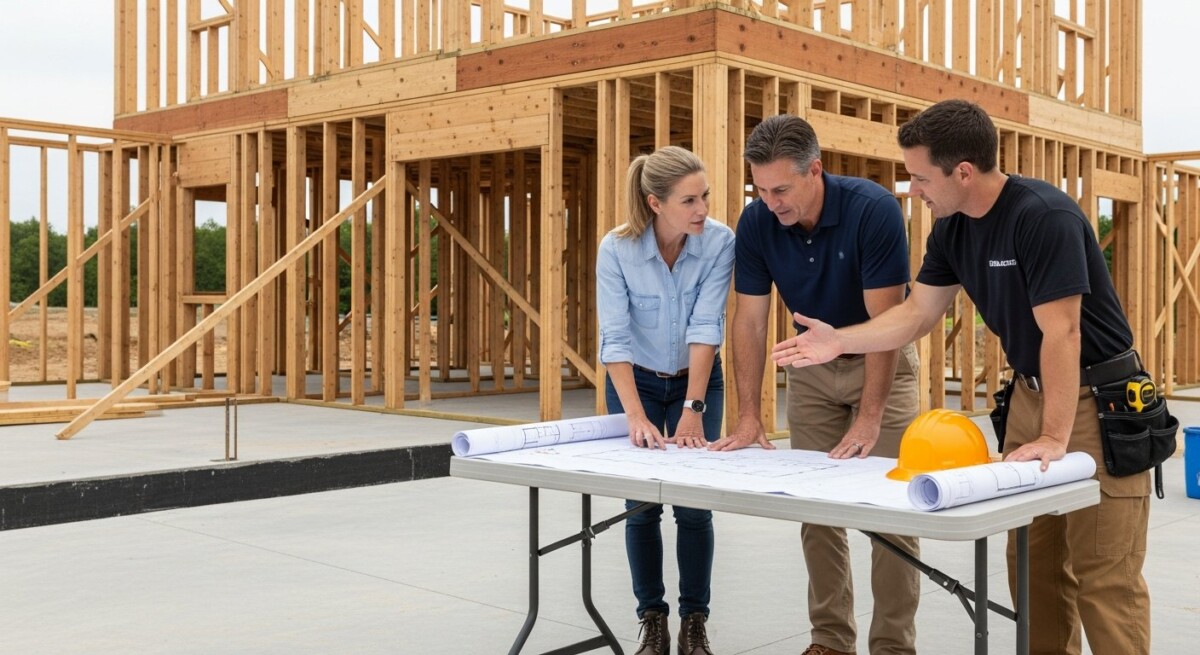
You have found the perfect piece of land, and you can already picture your dream home. But turning that vision into reality requires a unique type of financing that is different from a standard mortgage. Many people begin researching construction loan financing for new home build when they are planning to build from the ground up, refinance an existing lot, or simply want to avoid paying rent while their house is being built. Understanding how these loans work is the first step to making your dream home a financial reality.
Understanding Construction Loan Financing for a New Home Build
A construction loan is a short-term, interest-only loan that pays for the cost of building your home. Unlike a traditional mortgage where you receive a lump sum, a construction loan pays out funds in stages,called “draws”,as the builder completes each phase of construction. This protects both you and the lender by ensuring money is available only when work is actually done.
Once the home is finished, the construction loan typically converts into a permanent mortgage. This is often called a “construction-to-permanent” loan. Until that conversion happens, you only pay interest on the amount that has been drawn, which keeps initial payments low. Because these loans are riskier for lenders (there is no finished house to serve as collateral yet), the qualification requirements are usually stricter than for a standard home loan.
Why People Search for Construction Loan Financing
Home buyers choose construction loans because they want a custom-built home that meets their exact needs and budget. Others search for these loans because they already own land and want to build rather than buy an existing property. Refinancing an existing construction loan into a permanent mortgage is also a common reason people explore this option, as it can lock in a lower long-term interest rate.
Why Mortgage Rates and Loan Terms Matter
The interest rate on your construction loan directly affects how much you pay every month,and how much you pay over the life of the loan. Even a small difference in rate can mean thousands of dollars in savings or extra costs. For example, a 6% rate versus a 7% rate on a $300,000 loan adds about $200 per month to your payment.
Loan terms also matter. A shorter-term construction loan (like 12 months) might have a lower rate but require you to finish building quickly. A longer term gives you more breathing room but may come with a slightly higher rate. Understanding how rates and terms work together helps you choose a loan that fits your timeline and budget.
If you are exploring home financing options, comparing lenders can help you find better rates. Request mortgage quotes or call (555) 123-4567 to review available options.
Common Mortgage Options
When building a new home, you have several loan types to choose from. Each works a little differently, so it pays to know what is available before you commit. The most common options include construction-to-permanent loans, stand-alone construction loans, and renovation loans.
Here are the most common mortgage types you will encounter:
- Fixed-rate mortgages , The interest rate stays the same for the entire loan term, giving you predictable monthly payments.
- Adjustable-rate mortgages (ARMs) , The rate is fixed for an initial period (like 5 or 7 years) then adjusts periodically based on market rates.
- FHA loans , Backed by the Federal Housing Administration, these require lower down payments and are easier to qualify for.
- VA loans , Available to eligible veterans and active-duty military, these offer zero down payment and competitive rates.
- Refinancing loans , Used to replace an existing mortgage with a new one, often to get a lower rate or change loan terms.
How the Mortgage Approval Process Works
The approval process for a construction loan follows a similar path to a regular mortgage but with a few extra steps. Lenders want to see that you have a solid financial history, a reliable income, and a realistic building plan. They also need to evaluate the builder and the land.
Here is a typical step-by-step process:
- Credit review , The lender checks your credit score and credit history to assess your risk as a borrower.
- Income verification , You provide pay stubs, tax returns, and bank statements to prove you can afford the payments.
- Loan pre-approval , Based on your credit and income, the lender gives you a preliminary approval amount.
- Property evaluation , The lender appraises the land and reviews the builder’s plans, timeline, and budget.
- Final loan approval , Once all documents are in order, the lender issues final approval and sets the loan terms.
Speaking with lenders can help you understand your eligibility and available loan options. Compare mortgage quotes here or call (555) 123-4567 to learn more.
Factors That Affect Mortgage Approval
Lenders look at several key factors when deciding whether to approve your construction loan. Understanding these can help you prepare and improve your chances of getting approved. The stronger your financial profile, the better your interest rate will be.
Key factors lenders consider:
- Credit score , A higher score (typically 680 or above) shows you are a responsible borrower.
- Income stability , Lenders want to see a steady income from a reliable source, usually for at least two years.
- Debt-to-income ratio (DTI) , This is your monthly debt payments divided by your gross monthly income. Most lenders prefer a DTI below 43%.
- Down payment amount , Construction loans often require 20% or more down, though some programs allow less.
- Property value , The lender will appraise the land and the finished home to ensure the loan amount matches the value.
What Affects Mortgage Rates
Mortgage rates are influenced by a mix of market forces and personal financial factors. While you cannot control the broader economy, you can take steps to qualify for the best rate available to you. Knowing what drives rates helps you time your application wisely.
Here are the main factors that affect your interest rate:
- Market conditions , The Federal Reserve, inflation, and overall economic health all impact average mortgage rates.
- Credit profile , Your credit score and history are the strongest personal factors; a higher score usually means a lower rate.
- Loan term , Shorter-term loans (like 15 years) typically have lower rates than 30-year loans.
- Property type , Loans for owner-occupied primary residences usually have better rates than investment properties or second homes.
Mortgage rates can vary between lenders. Check current loan quotes or call (555) 123-4567 to explore available rates.
Tips for Choosing the Right Lender
Not all lenders offer construction loans, and the ones that do may have very different rates, fees, and requirements. Taking the time to choose the right lender can save you money and stress throughout the building process. A good lender will also guide you through the conversion to a permanent mortgage.
Here are practical tips for selecting the best lender:
- Compare multiple lenders , Get quotes from at least three lenders to see who offers the best combination of rate and terms.
- Review loan terms carefully , Look at the interest rate, loan length, draw schedule, and conversion terms.
- Ask about hidden fees , Inquire about origination fees, appraisal fees, and prepayment penalties.
- Check customer reviews , Read what other borrowers say about the lender’s communication and reliability during construction.
Long-Term Benefits of Choosing the Right Mortgage
Selecting the right construction loan and permanent mortgage can benefit you financially for decades. A lower interest rate means lower monthly payments, which frees up money for other goals like saving for retirement or college tuition. Over 30 years, even a 1% rate difference can save you tens of thousands of dollars.
Beyond the numbers, the right mortgage gives you financial stability. A fixed-rate loan protects you from future rate increases, while a well-structured construction loan keeps your project on track and within budget. When you choose wisely, you build more than a house,you build long-term financial security.
In our guide on auto loan rate comparison made simple for home buyers, we explain how comparing rates across lenders works for other types of financing. The same principle applies to construction loans: shopping around pays off.
Frequently Asked Questions
What is construction loan financing for a new home build?
A construction loan is a short-term loan that pays for building a home. Funds are released in stages as construction progresses, and you only pay interest on the amount drawn. Once the home is finished, the loan usually converts to a permanent mortgage.
How is a construction loan different from a regular mortgage?
A regular mortgage gives you a lump sum to buy a finished home, and you start paying principal and interest right away. A construction loan pays out in stages during building, requires interest-only payments during construction, and then converts to a standard mortgage after completion.
What credit score do I need for a construction loan?
Most lenders require a credit score of at least 680 for a construction loan, though some programs may accept scores as low as 620. A higher score improves your chances of approval and gets you a better interest rate.
Can I use a construction loan if I already own land?
Yes. If you already own the land, you can use it as equity toward your down payment. This reduces the amount of cash you need upfront and can make qualifying easier.
How long does a construction loan last?
Construction loans are typically 12 to 18 months, which gives you enough time to complete most building projects. If delays occur, you may be able to extend the loan, but that usually comes with additional fees.
What happens to my interest rate after construction ends?
If you choose a construction-to-permanent loan, you lock in your rate at the beginning, and it stays the same when the loan converts. With a stand-alone construction loan, you will need to refinance into a permanent mortgage at whatever rates are available when construction finishes.
Are there down payment requirements for construction loans?
Yes. Most construction loans require a down payment of 20% or more. However, some government-backed programs like FHA or VA loans may allow lower down payments, sometimes as low as 3.5% for FHA.
For more details on how personal loan rates compare, check out our guide on average personal loan rates today: what home buyers should know.
Building your dream home is exciting, but the financing side can feel overwhelming. You do not have to figure it out alone. Request mortgage quotes or call (555) 123-4567 to speak with a specialist who can help you compare construction loan options and find the best rate for your new home build.