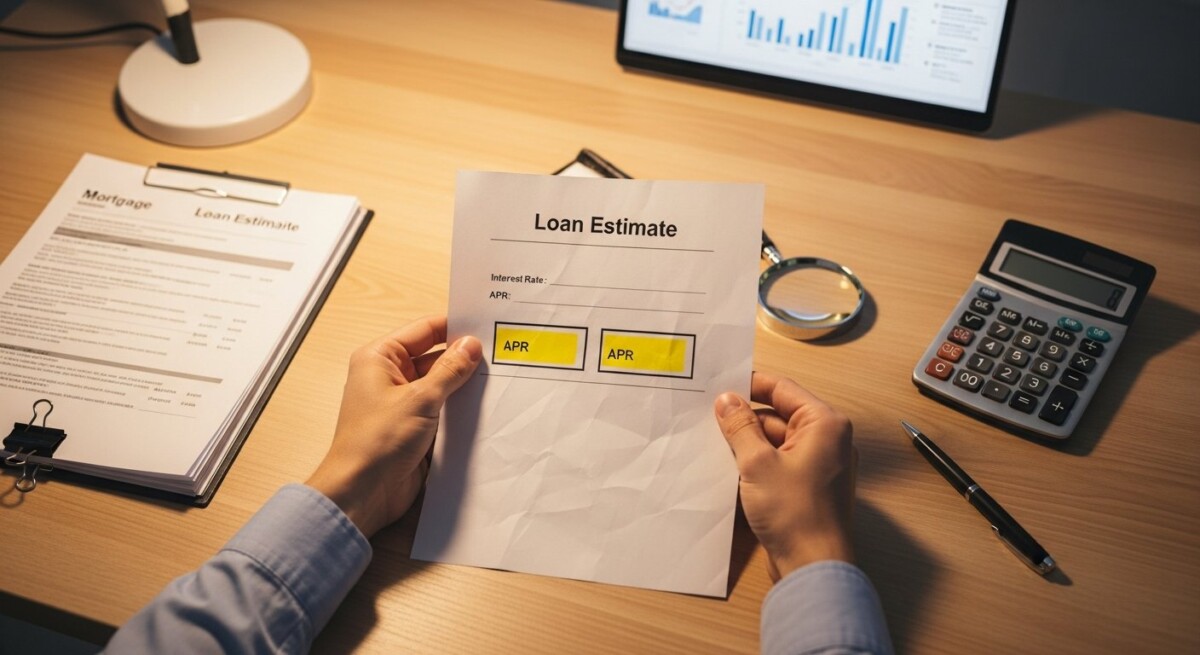
Picture this: You are pre-approved for a mortgage, and the lender hands you a loan estimate with two different numbers,an interest rate and an APR. They look similar, but they are not the same. Many home buyers and refinancers start researching APR vs interest rate on mortgage loan when they realize that the lowest interest rate does not always mean the cheapest loan. Understanding the difference can save you thousands of dollars over the life of your mortgage.
Understanding APR vs Interest Rate on Mortgage Loan
The interest rate is the cost you pay each year to borrow money, expressed as a percentage. It determines your monthly principal and interest payment. The APR, or annual percentage rate, is a broader measure. It includes the interest rate plus certain lender fees, broker fees, discount points, and closing costs rolled into the loan.
Think of the interest rate as the base price of a car and the APR as the out-the-door price with taxes, fees, and add-ons. The APR gives you a more complete picture of what the loan actually costs. That is why comparing APR vs interest rate on mortgage loan is essential when shopping for a home loan or refinance.
Many borrowers search for this comparison because they notice two different numbers on their loan estimate and want to know which one matters more. The short answer: both matter, but the APR is better for comparing total loan costs across different lenders.
Why Mortgage Rates and Loan Terms Matter
The interest rate on your mortgage directly affects your monthly payment. A lower rate means lower payments, which can free up cash for other expenses or savings. Over a 30-year loan, even a 0.5% difference in rate can add up to tens of thousands of dollars in extra interest.
Loan terms,like whether you choose a 15-year or 30-year mortgage,also shape your financial future. Shorter terms usually have lower rates but higher monthly payments. Longer terms offer smaller payments but more interest over time. Understanding these trade-offs helps you align your mortgage with your budget and long-term goals.
When you compare APR vs interest rate on mortgage loan, you see the real cost of different loan offers. This knowledge empowers you to choose a loan that fits your financial plan, not just one with a low headline rate.
If you are exploring home financing options, comparing lenders can help you find better rates. Request mortgage quotes or call (insert phone number) to review available options.
Common Mortgage Options
Borrowers can choose from several types of home loans. Each has different features, interest rate structures, and eligibility requirements. Knowing your options helps you pick the right fit for your situation.
- Fixed-rate mortgages: The interest rate stays the same for the entire loan term. This gives you predictable monthly payments. It is the most popular choice for buyers who plan to stay in their home for many years. In our guide on what a fixed interest rate is, we explain how it provides stability and helps with long-term budgeting.
- Adjustable-rate mortgages (ARMs): The rate starts lower than a fixed-rate loan but can change over time based on market conditions. ARMs can save money early on, but they carry the risk of higher payments later.
- FHA loans: Backed by the Federal Housing Administration, these loans allow smaller down payments and lower credit scores. They are popular with first-time home buyers.
- VA loans: Available to eligible veterans, active-duty service members, and military families. They often require no down payment and have competitive rates.
- Refinancing loans: These replace your current mortgage with a new one, often to secure a lower rate or switch loan types. For a deeper look at how rates shift over time, read our interest rate forecast article.
How the Mortgage Approval Process Works
The mortgage approval process can feel overwhelming, but it follows a predictable path. Lenders evaluate your finances and the property to decide if you qualify for a loan and at what rate. Understanding the steps reduces stress and helps you prepare.
- Credit review: The lender checks your credit score and credit history to assess your risk as a borrower.
- Income verification: You provide pay stubs, tax returns, and bank statements to prove you can afford the payments.
- Loan pre-approval: The lender gives you a conditional commitment for a specific loan amount based on your credit and income.
- Property evaluation: An appraiser determines the home’s value to ensure it is worth the loan amount.
- Final loan approval: After underwriting reviews all documents, the lender issues a final approval and funds the loan at closing.
Speaking with lenders can help you understand your eligibility and available loan options. Compare mortgage quotes here or call (insert phone number) to learn more.
Factors That Affect Mortgage Approval
Lenders look at several key factors to decide whether to approve your loan and what interest rate to offer. Knowing these factors helps you improve your chances of approval and secure better terms.
- Credit score: A higher score usually qualifies you for lower interest rates. Most lenders prefer a score of 620 or higher for conventional loans.
- Income stability: Steady employment and sufficient income show lenders you can make payments consistently.
- Debt-to-income ratio (DTI): This compares your monthly debt payments to your gross monthly income. A lower DTI indicates you have room in your budget for a mortgage payment.
- Down payment amount: A larger down payment reduces the lender’s risk and may help you avoid private mortgage insurance (PMI).
- Property value: The appraised value must support the loan amount. If the appraisal comes in low, you may need to adjust your offer or put more money down.
What Affects Mortgage Rates
Mortgage rates change daily based on a mix of broad economic forces and personal financial factors. Understanding these influences helps you time your application and improve your rate.
Market conditions, such as inflation, employment data, and Federal Reserve policy, drive overall rate trends. When the economy is strong, rates tend to rise. When it weakens, rates often fall. Your personal credit profile also plays a major role. Borrowers with excellent credit and low DTI ratios typically receive the best rates.
Loan term and property type matter too. For example, 15-year loans generally have lower rates than 30-year loans. Investment properties and vacation homes usually have higher rates than primary residences. If you are considering an ARM, you might wonder what a variable interest rate is and how it compares to fixed-rate options.
Mortgage rates can vary between lenders. Check current loan quotes or call (insert phone number) to explore available rates.
Tips for Choosing the Right Lender
Choosing the right lender is just as important as choosing the right loan. A good lender offers competitive rates, transparent fees, and responsive customer service. Here are practical tips to help you make a smart choice.
- Compare multiple lenders: Get quotes from at least three different lenders. Compare both the interest rate and the APR to see the full cost.
- Review loan terms carefully: Look beyond the rate. Check the loan term, prepayment penalties, and whether the rate is fixed or adjustable.
- Ask about hidden fees: Some lenders charge origination fees, application fees, or processing fees that are not included in the APR. Ask for a complete fee breakdown.
- Check customer reviews: Read online reviews and ask for referrals. A lender with great rates but poor communication can cause unnecessary stress during the process.
Long-Term Benefits of Choosing the Right Mortgage
Selecting the right mortgage does more than lower your monthly payment. It sets you up for long-term financial success. A loan with a favorable rate and terms can save you tens of thousands of dollars in interest over the life of the loan.
Lower monthly payments improve your cash flow, allowing you to save for retirement, invest in education, or build an emergency fund. Predictable payments from a fixed-rate mortgage make budgeting easier and reduce financial stress. Choosing the right loan also helps you build home equity faster, which can be used later for renovations, debt consolidation, or a down payment on another property.
When you understand APR vs interest rate on mortgage loan and shop around for the best deal, you take control of your financial future. The effort you put into comparing lenders today pays off for decades.
Frequently Asked Questions
What is the main difference between APR and interest rate on a mortgage?
The interest rate is the cost of borrowing money, shown as a percentage of the loan amount. The APR includes the interest rate plus certain lender fees and closing costs, giving you a fuller picture of the total loan cost. The APR is usually higher than the interest rate when fees are included.
Which is more important when comparing mortgage offers: APR or interest rate?
The APR is more important for comparing total loan costs between lenders because it includes fees. However, the interest rate matters most for your monthly payment. Look at both numbers, but use the APR as your main comparison tool when shopping.
Can the APR be lower than the interest rate?
It is very rare for the APR to be lower than the interest rate. This can happen if the lender offers a temporary rate buydown or credits that reduce upfront costs. In most cases, the APR is equal to or higher than the interest rate.
Why do different lenders show different APRs for the same interest rate?
Lenders may include different fees in their APR calculations, such as origination fees, discount points, or processing costs. A lower APR usually means fewer fees, but always ask for a full breakdown of what is included.
Does a lower APR always mean a better mortgage deal?
Not always. A lower APR generally indicates lower total costs, but you should also consider the loan term, monthly payment, and whether you plan to stay in the home long-term. A lower APR with high upfront fees may not be the best choice if you plan to move soon.
How can I get the best mortgage rate and APR?
Improve your credit score, keep your debt-to-income ratio low, and save for a larger down payment. Shop around with multiple lenders and compare both the interest rate and APR. Use online tools like the mortgage calculator on RateChecker to estimate your costs.
What fees are included in the APR?
The APR typically includes the interest rate, discount points, origination fees, and certain lender charges. It does not include all closing costs, such as title insurance, appraisal fees, or escrow deposits. Always review your loan estimate for a complete list of fees.
Should I focus on the APR or the interest rate when refinancing?
Focus on the APR when refinancing because it shows the full cost of the new loan, including refinancing fees. A lower APR means you will recoup your closing costs faster and start saving money sooner.
Understanding the difference between APR and interest rate helps you make a confident, informed decision. Before you commit to any mortgage, take time to compare offers and ask questions. Request quotes from multiple lenders and use the tools available on RateChecker to see personalized rates. The right loan is out there,you just need to know what to look for.