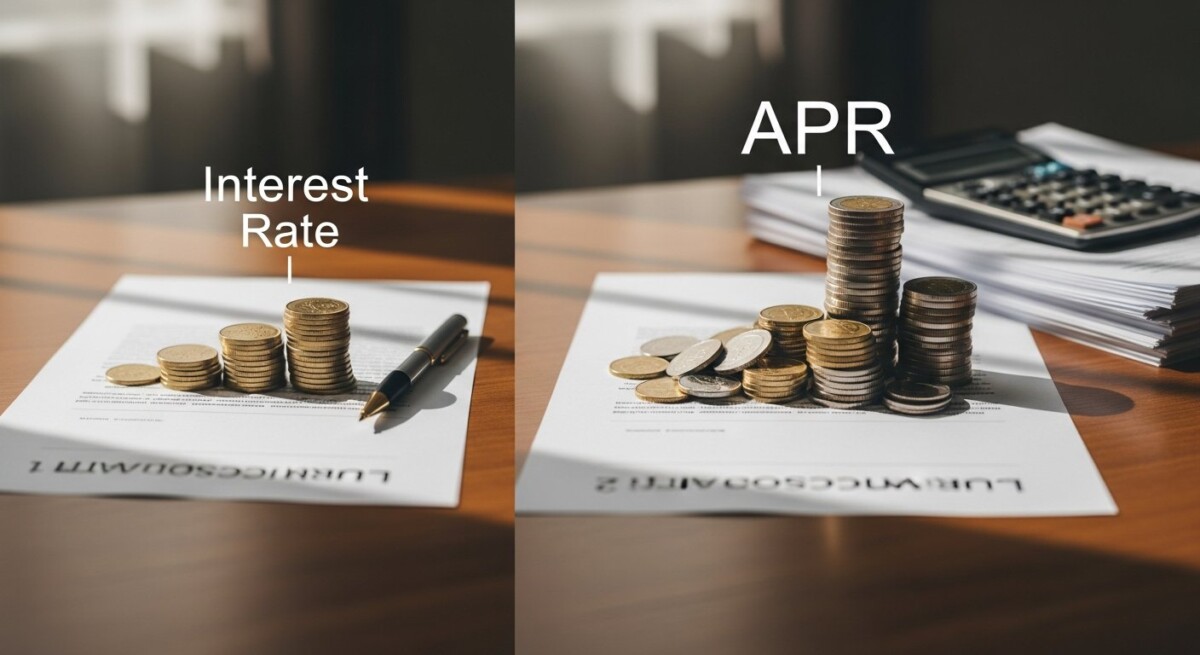
You have found a home you love, and now the paperwork begins. As you compare loan offers, you see two numbers that look similar but are not the same: the interest rate and the APR. Many home buyers start researching what is the difference between apr and interest rate on a home loan when they realize these two numbers can change the total cost of borrowing by thousands of dollars. Understanding this difference is one of the most practical steps you can take before signing on the dotted line.
Understanding what is the difference between apr and interest rate on a home loan
The interest rate is the basic cost you pay each year to borrow money, expressed as a percentage. It is the number that determines your monthly principal and interest payment. If you see a 6% interest rate, that is what you pay on the loan balance each year, not including other fees.
The APR, or Annual Percentage Rate, is a broader measure. It includes the interest rate plus any lender fees, discount points, mortgage broker fees, and certain other costs you pay to get the loan. Because the APR includes these extra charges, it is almost always higher than the interest rate.
People search for what is the difference between apr and interest rate on a home loan because they want to compare loan offers fairly. Two lenders may offer the same interest rate, but one may charge higher fees, resulting in a higher APR. The APR gives you a more complete picture of what you will pay over the life of the loan.
A Simple Example to Clarify
Imagine Lender A offers a 30-year loan with a 6% interest rate and $3,000 in fees. Lender B offers the same loan with a 6% interest rate but $6,000 in fees. Lender A’s APR will be lower because you are paying fewer upfront costs, even though the interest rate is identical. This is why comparing APRs side by side can help you spot the better deal.
Why Mortgage Rates and Loan Terms Matter
The interest rate directly affects your monthly payment. A lower rate means a lower payment, which can free up cash for other expenses or savings. Over 30 years, even a half-percent difference can add up to tens of thousands of dollars.
The APR matters because it shows the true cost of the loan, including fees that lenders may not highlight. If you focus only on the interest rate, you might choose a loan with low monthly payments but high upfront fees that eat into your savings. Knowing both numbers helps you make a financially sound decision.
When you compare loan offers, always look at the APR alongside the interest rate. This practice can help you avoid expensive loans and choose a mortgage that fits your budget both now and in the future.
If you are exploring home financing options, comparing lenders can help you find better rates. Request mortgage quotes or call (855) 324-3738 to review available options.
Common Mortgage Options
Not all home loans are the same. The type of mortgage you choose affects your interest rate, APR, and monthly payment. Here are the most common options you will encounter:
- Fixed-rate mortgages , The interest rate stays the same for the entire loan term, usually 15 or 30 years. Your payment remains predictable, making budgeting easier.
- Adjustable-rate mortgages (ARMs) , The rate is fixed for an initial period, then adjusts periodically based on market conditions. ARMs often start with lower rates, but your payment can increase later.
- FHA loans , Backed by the Federal Housing Administration, these loans allow lower down payments and are popular with first-time buyers who have less-than-perfect credit.
- VA loans , Available to eligible veterans and active-duty military, VA loans often require no down payment and offer competitive rates.
- Refinancing loans , These replace your current mortgage with a new one, often to get a lower rate, change the loan term, or access home equity.
Each loan type has its own rules about fees, which directly impacts the APR. For example, FHA loans require mortgage insurance premiums that raise the APR, while VA loans may have lower fees. Understanding these differences helps you choose the right product for your situation.
How the Mortgage Approval Process Works
The mortgage approval process can feel overwhelming, but it follows a logical sequence. Lenders need to verify that you can repay the loan before they give you a rate and APR quote.
- Credit review , Lenders pull your credit report to check your score and history. A higher score usually qualifies you for lower rates.
- Income verification , You provide pay stubs, tax returns, and bank statements to prove you have steady income.
- Loan pre-approval , The lender reviews your finances and tells you how much you can borrow. This step gives you a clear budget for house hunting.
- Property evaluation , An appraiser assesses the home’s value to ensure it is worth the loan amount.
- Final loan approval , Once everything checks out, the lender issues a final commitment, and you can close on the home.
During this process, the lender will give you a Loan Estimate that shows both the interest rate and the APR. Review this document carefully. If you have questions about fees, ask your lender before moving forward.
Speaking with lenders can help you understand your eligibility and available loan options. Compare mortgage quotes here or call (855) 324-3738 to learn more.
Factors That Affect Mortgage Approval
Lenders evaluate several factors to decide whether to approve your loan and at what rate. These factors also influence the APR you receive.
- Credit score , Higher scores signal lower risk, which often leads to better rates and lower APRs.
- Income stability , Consistent employment and income show lenders that you can make payments on time.
- Debt-to-income ratio (DTI) , This compares your monthly debt payments to your gross income. A lower DTI improves your chances of approval.
- Down payment amount , A larger down payment reduces the lender’s risk and may lower your rate and APR.
- Property value , The home must appraise for at least the purchase price to secure financing.
If your credit score is lower than you would like, consider taking a few months to improve it before applying for a mortgage. Even a small increase can lead to a better APR. For more guidance, read our article on refinancing with bad credit to see what options may be available.
What Affects Mortgage Rates
Mortgage rates are influenced by both broad economic forces and your personal financial profile. Understanding these factors can help you time your application and improve your chances of getting a favorable rate.
Market conditions, such as inflation, employment data, and Federal Reserve policy, affect the overall level of rates. When the economy is strong, rates tend to rise. When it weakens, rates often fall. You cannot control these factors, but you can monitor them and lock in a rate when conditions are favorable.
Your personal credit profile also plays a major role. Borrowers with excellent credit scores, low debt, and stable income typically receive the lowest rates and APRs. The loan term matters too,15-year mortgages usually have lower rates than 30-year loans, but the monthly payment is higher. Additionally, the type of property (single-family home vs. condo) and whether it is your primary residence can affect pricing.
If you are considering refinancing, you may wonder whether you can keep the same interest rate. Our guide on refinancing and rate retention explains how this works in practice.
Mortgage rates can vary between lenders. Check current loan quotes or call (855) 324-3738 to explore available rates.
Tips for Choosing the Right Lender
Selecting a lender is just as important as choosing the loan type. The right lender will offer transparent pricing, good customer service, and a loan that fits your financial goals.
- Compare multiple lenders , Get quotes from at least three different lenders and compare both the interest rate and the APR. This helps you see the full picture.
- Review loan terms carefully , Look beyond the rate. Check for prepayment penalties, balloon payments, or other terms that could cost you later.
- Ask about hidden fees , Some lenders include fees in the APR, but others may not. Ask for a full list of closing costs before you commit.
- Check customer reviews , Read reviews from other borrowers to gauge the lender’s responsiveness and reliability.
A lender who takes the time to explain what is the difference between apr and interest rate on a home loan in plain language is likely one you can trust. Do not be afraid to ask questions until you feel comfortable.
Long-Term Benefits of Choosing the Right Mortgage
Choosing the right mortgage does more than just get you into a home,it sets you up for long-term financial health. When you understand both the interest rate and the APR, you can select a loan that minimizes your total cost.
Lower monthly payments give you more breathing room in your budget. You can use the savings to build an emergency fund, invest for retirement, or pay down other debts. Over time, this financial flexibility can reduce stress and improve your quality of life.
Long-term savings are another major benefit. A loan with a competitive APR means you pay less in fees and interest over the years. For a 30-year mortgage, even a 0.25% difference in APR can save you thousands of dollars. That is money you can put toward home improvements, education, or your future.
Finally, choosing the right mortgage gives you confidence. You know exactly what you are paying and why. You can plan for the future with certainty, knowing that your housing costs align with your financial goals.
What Is a Good APR for a Mortgage?
A good APR depends on current market conditions and your credit profile. In general, an APR that is within 0.5% of the interest rate is considered reasonable. If the gap is larger, the loan likely includes high fees. Compare offers from multiple lenders to see what is available in your area.
Can APR Change After Closing?
No, the APR is fixed at closing just like the interest rate. However, the APR you see on your Loan Estimate may differ slightly from the final number if actual costs change before closing. Always review the Closing Disclosure to confirm the final APR.
Does a Lower APR Always Mean a Better Loan?
Not always. A very low APR may come with a higher interest rate or unfavorable terms, such as a balloon payment. Always look at the full loan terms, including the interest rate, fees, and repayment schedule, before deciding.
How Do I Calculate APR on a Mortgage?
You do not need to calculate it yourself. Lenders are required by law to provide the APR on your Loan Estimate and Closing Disclosure. You can use an online mortgage calculator to estimate how different APRs affect your total cost.
Why Is My APR Higher Than My Interest Rate?
Because the APR includes lender fees, discount points, and other costs. The gap between the two numbers reflects how much you are paying to get the loan. A large gap means higher upfront costs.
Should I Focus on APR or Monthly Payment?
Both matter. The monthly payment tells you what you will pay each month, while the APR tells you the total cost over the life of the loan. If you plan to stay in the home for many years, the APR is more important. If you plan to sell or refinance soon, focus on the monthly payment and upfront fees.
Do All Lenders Calculate APR the Same Way?
Most lenders follow federal guidelines, but there can be small differences in which fees are included. Always ask each lender which fees are part of their APR calculation so you can compare apples to apples.
Can I Negotiate the APR?
You can negotiate the fees that make up the APR. Ask the lender to waive or reduce certain charges, such as the application fee or processing fee. You can also pay discount points to lower your interest rate, which will affect the APR.
Understanding the difference between APR and interest rate is a powerful tool for any home buyer or homeowner. It helps you compare loans fairly, avoid unnecessary fees, and choose a mortgage that supports your long-term financial goals. Before you commit to any loan, take the time to review both numbers, ask questions, and explore multiple offers. The effort you put in now can save you thousands of dollars and give you peace of mind for years to come.